


Is Autism A Disability
By: Vanessa Blanchard
Not always.
Autism is a (common) largely genetic condition that results in a range of developmental delays. It can be disabling, especially in an environment filled with harsh sensory and social demands. Co-occurring conditions can contribute to the disability autistic kids might experience.
You’ll notice that autistic people can be very talented and capable in some areas and struggle in other, more surprising areas. This is sometimes referred to as a spiky talent profile.
For example, your autistic child might be able to read at a very early age but struggle with the motor skills necessary to tie their shoes.
Is Autism Neurological?
Yes. Autistic brains have structural differences that cause some of the issues experienced. Part of this structural difference occurs in the limbic system, which controls things like learning, memory, sensory processing, emotional regulation, and our fight or flight responses.
Is Autism an Intellectual Disability?
No. Intellectual disabilities are found within autism, but they can occur outside of autism and autism can present itself without an intellectual impairment.
The concept of intelligence also comes with a lot of negative stereotypes, too. For example, it is often assumed that non-verbal autistic kids don’t think, which has been proven wrong by countless autistic authors. People also assume that people can be “too smart” to be autistic or to struggle with school or daily functioning.
Can I apply for a Social Security Disability Benefits?
Your child might be eligible for social security disability benefits.
What to Do
Assume that your child is capable, even if they are delayed or struggling. Even lifelong impairments can improve with support and patient skill building.
What Not to Do
Don’t assume your child isn’t trying if they’re bad at random things. Being good at some things doesn’t erase the struggles found in other areas.
Don’t label your kids as having a mentality younger than their actual age. It’s called infantilizing and it’s dehumanizing. The only people who have the mentality of a 12-year-old are people who are actually 12 years old, even if they have intellectual disabilities.
About the writer
I’m a writer, artist, and advocate who loves living in Maine among the trees and oceanside villages. I’m also autistic, ADHD, and PTSD. My education, both academic and personal, has centered around mental health and neurodevelopmental disabilities, as well as discrimination and the socioeconomic consequences of living disabled in America. I work to plant seeds and spread ideas through my writing. You can find me on Twitter @ladysnessa.

What Does Autism Really Feel Like
By: Vanessa Blanchard
So what is it like to be autistic?
Autism presents in many ways but being misunderstood is one of the more common experiences we share.
Our neurological variations make us perceive the world differently than most, which means our behaviours and communications can be confusing.
We tend to think differently than those around us. We see more patterns, we noticed different types of details, and we tend to miss lots of other details, like social cues.
We tend to be trusting and honest, which makes us vulnerable to grifters.
Most importantly, we often don’t recognize or relate to social norms. This leads to a tremendous amount of discrimination by neurotypical folks, who default to dismissing us rather than working to understand us.
What is Sensory Processing Disorder?
Sensory Processing Disorder (SPD) is a neurological condition that means that our brains process sensory information differently. We tend to experience the world in a very heightened way. Our bodies take in so much sensory information that it’s often uncomfortable and overwhelming.
It’s like there’s no filter and no way to tone down the amount of information we take in and that can take a huge toll on our emotions, focus, and general functioning.
SPD is common in autism, but it can exist on its own or alongside other conditions like ADHD or PTSD. People often don’t acknowledge SPD as a valid issue faced by autistic kids and blame their emotional distress on bad behavior or bad parenting. It’s neither. Meltdowns are involuntary neurological events driven by sensory information overwhelming the amygdala.
What is synesthesia?
Synesthesia is a form of SPD where the senses get sort of jumbled together. Images or sounds might have tastes, tastes might have textures, or colors may have sounds. It ranges from difficult to impossible to detangle these senses, which can be distressing and overwhelming at times. It can also be pretty neat.
What To Do
Work with your autistic child to identify their sensory needs and learn how to meet them. Regulating their environments, providing sensory safe zones, and looking into options like mindfulness and medication can help.
What Not to Do
Don’t punish your child for expressing distress over their sensory overwhelm. Our distress can be extreme and meltdowns are very painful experiences for us.
Don’t judge yourself or your parenting, either.
About the writer
I’m a writer, artist, and advocate who loves living in Maine among the trees and oceanside villages. I’m also autistic, ADHD, and PTSD. My education, both academic and personal, has centered around mental health and neurodevelopmental disabilities, as well as discrimination and the socioeconomic consequences of living disabled in America. I work to plant seeds and spread ideas through my writing. You can find me on Twitter @ladysnessa.
What Not to Do with an Autistic Child - the “inside information” guide
Intro
Raising an autistic child can be confusing.
There are so many ways that their behaviours and needs are unique to what we’re told standard development looks like. It’s hard knowing what to do and what not to do when raising autistic kids.
Information circulating outside the autistic community can be conflicted, riddled with judgements and stigmas, and ultimately far less helpful than it hopes to be.
To combat this, many autistic adults have dedicated their time and energy to sharing their experiences so that parents, kids, and other autistic adults can have help understanding and meeting our unique needs.
Parents can find a lot of comfort and information from other autistic adults.
Here’s a compilation of some of the most commonly asked questions or issues raised by parents with an autistic child, as well as some general advice about what to do and what not to do on each topic.
Since it is written by an autistic adult, you can think of it as ten things every child with autism wishes you knew.
Contents
What is it Like to be Autistic
Is Autism a Disability
How to Handle an Autistic Child
How to Calm Down an Autistic Child
How to Deal with an Aggressive Autistic Child
How to Discipline an Autistic Child
How to Teach an Autistic Child
How to Teach an Autistic Child to Talk
How to Get an Autistic Child to Eat
How to Get an Autistic Child to Sleep
Keep Asking Autistics
Keep Asking Autistics Specifically About Your Child
These ideas are merely the tip of the iceberg when it comes to understanding and approaching your autistic child’s needs.
My biggest recommendation is that you keep reaching out to actually autistic folks to learn more.
So many of the researchers and medical professionals are neurotypical with very little insight into an autistic mind. They think they know, but they very often don’t, especially when it comes to the nuances involved in understanding one particular child.
Autistic people will tell you that every autistic person is different and will work with you to help you have a compassionate understanding of your child, one not rooted in discipline and rejection.
About me
I’m a writer, artist, and advocate who loves living in Maine among the trees and oceanside villages. I’m also autistic, ADHD, and PTSD. My education, both academic and personal, has centered around mental health and neurodevelopmental disabilities, as well as discrimination and the socioeconomic consequences of living disabled in America. I work to plant seeds and spread ideas through my writing. You can find me on Twitter @ladysnessa.
These 10 Companies Hire Autistic Adults
In this post, I’ll share 10 companies that hire autistic adults. I’ll also mention which companies offer work from home jobs since many autistic people say they prefer to work from home, even in the post COVID era. There are additional companies that offer jobs for autistic people but are more local in nature.
Intro
According to the CDC there are almost 5.5 million autistic adults in the US, from which 44% have average to above-average intelligence.
And yet, 85% of autistic adults are either unemployed or underemployed (underemployed = earn less than what they should).
Studies show that employers who were knowledgeable about autism (that doesn’t really require an academic degree, it is rather intuitive and easy to learn), as well as enabled some adjustment to the hiring process and work environment such as more breaks flexibility, sensory-related adjustments and more, lead to successful employment of autistic adults. It’s even easier with today’s remote job culture.
Autistic adults also emphasize the importance of adjustments in the work environment. Working from home, for example, is more important for many of them than the actual job itself.
You can learn more about how autistic-friendly your company is using this tool, and see how easy it could be to become one.
While most autistic-friendly employers listed below are big corporations, it does not mean a lot of resources are required to hire your first autistic employee. There is definitely a lean way for small and medium businesses to hire their first autistic employee.
Meanwhile, we have assembled some well-known employers who hire autistic adults.
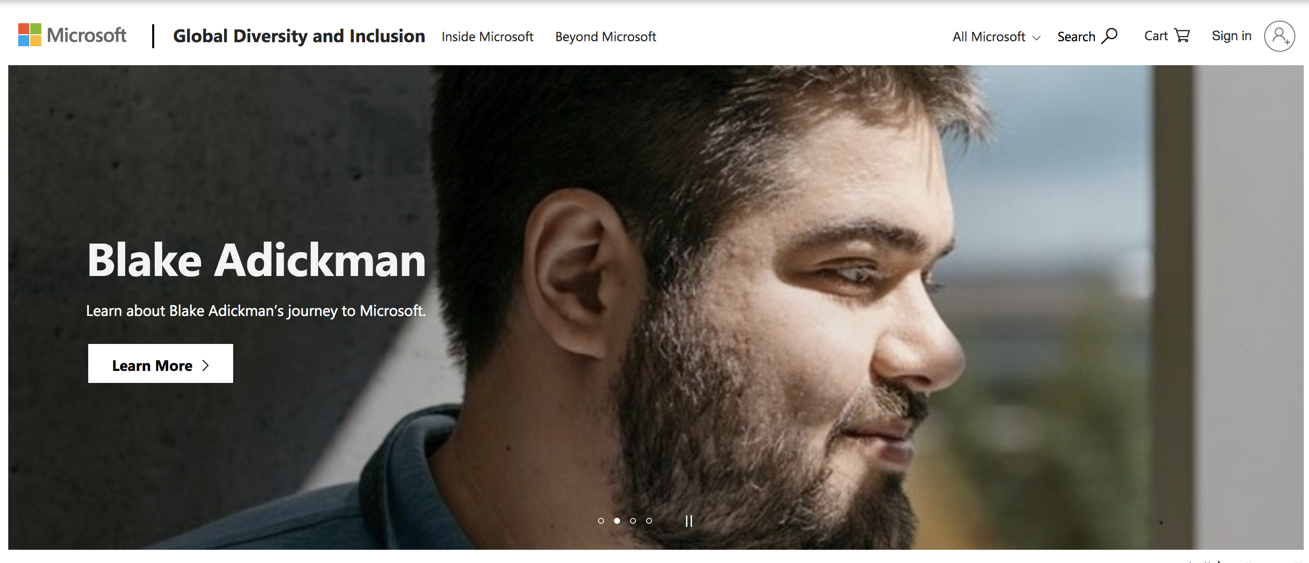
1) Microsoft
Type of roles:
Software engineers, data scientists, service engineers, marketing and finance.
Hiring process:
Phone interview, technical skills assessment, one-week in-person event, 3 interviews. Learn more about the hiring process here.
Remote option:
Doesn’t look like they have one.
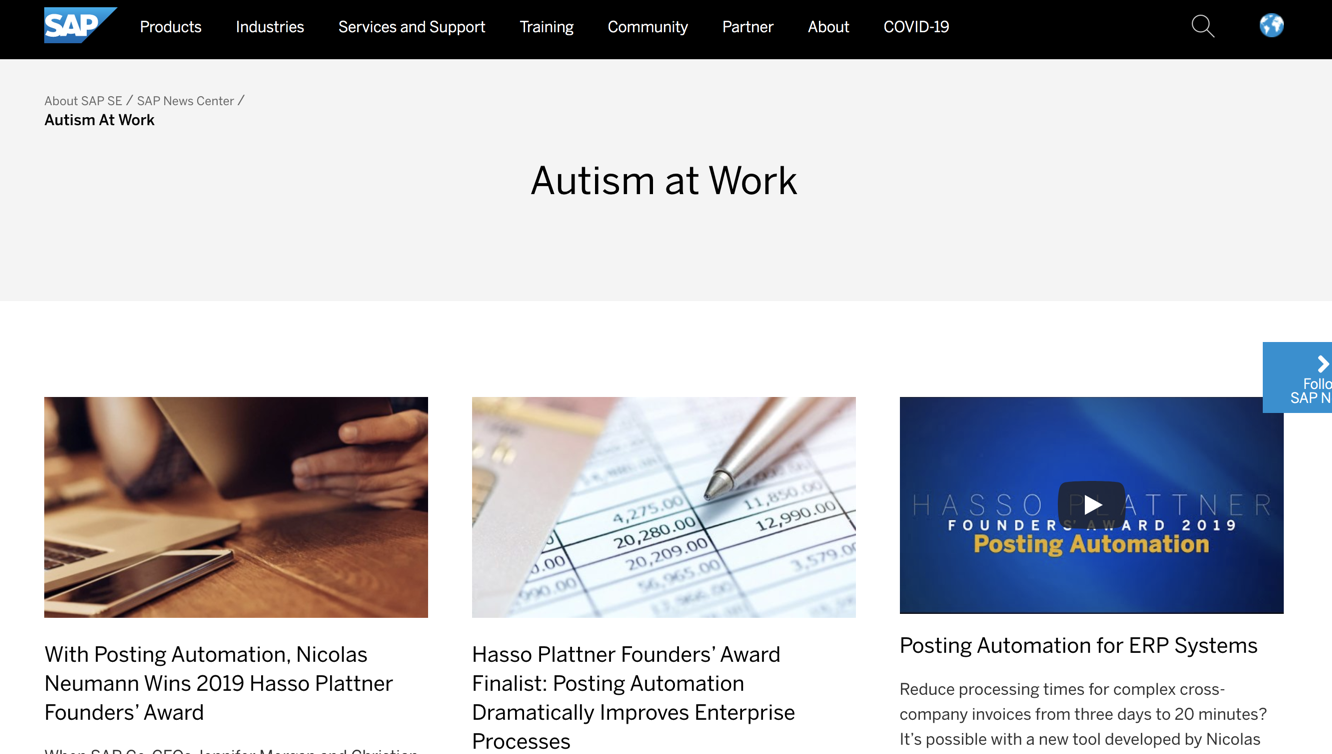
2) SAP
Type of roles:
A broad range of roles (21) including engineering, human resource, and project management.
Hiring process:
Qualifying phone interview (phone or Skype interview), intro the SAP’s autism @ work program, one-week in-person soft skills training, 5 weeks autism @ work readiness, 45-minute interviews.
Remote option:
Doesn’t look like they have one.
3) E&Y
Type of roles:
Data analytics, quantitative analysis, robotics, and cyber security.
Hiring process:
One week virtual technical exercise, one-week in-person training.
Remote option:
Doesn’t look like they have one.
Type of roles:
Broad. Bankers, data scientists, fraud analysts, compliance analysts and more.
Hiring process:
Phone call as well as in-person meet and greet, 3 weeks soft skills training done by vendors and interviews with breaks.
Remote option:
Doesn’t look like they have one.
5) IBM
Type of roles:
Looks like QA and software testing.
Hiring process:
Not clear enough. They have partnered with Specialistserne for some the training and hiring process.
Remote option:
Doesn’t look like they have one.
6) Dell
Type of roles:
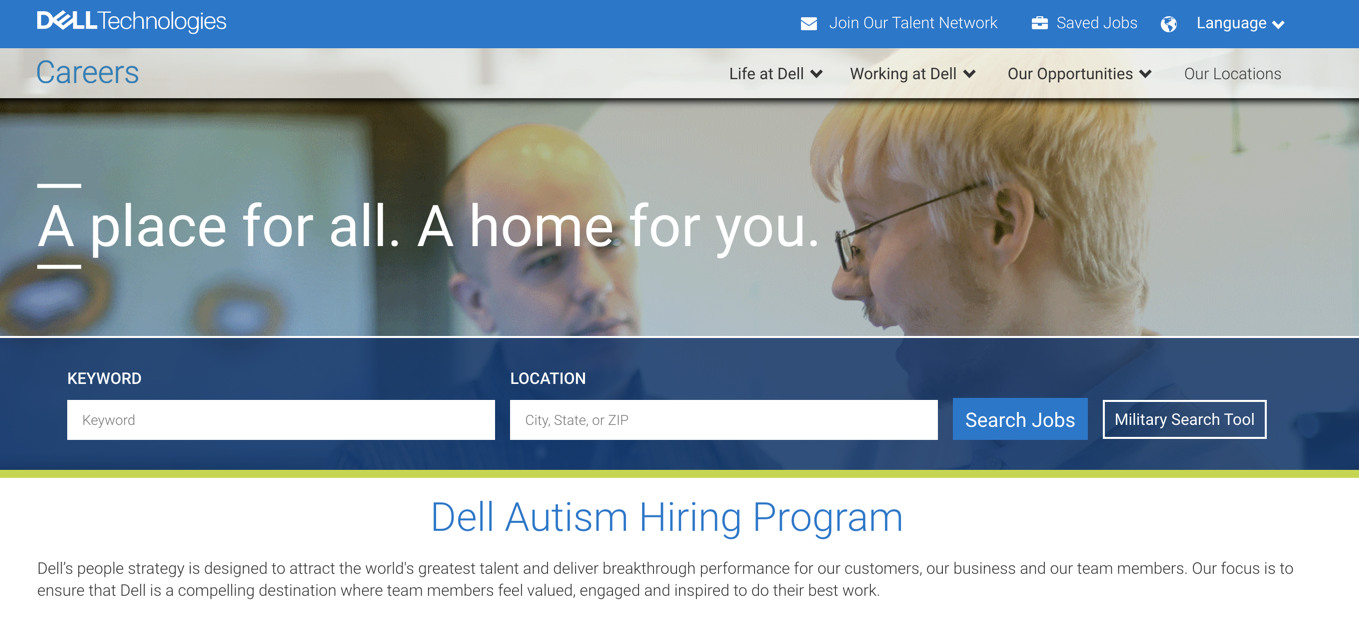
They have a summer paid internship in cyber-security, data analytics, IT, Audit / SOX Compliance, QE Engineering, Software Engineering, Supply Chain. In addition, there are full-time roles, probably in these domains as well.
Hiring process:
There is an initial screening process (they don’t mention the exact process, but it looks like it is managed by either HMEA (if you are in MA) or the Arc (if you are in Austin). Following the initial screening, there are two weeks skill assessments.
Remote option:
No.
7) Ultranauts

Provides onshore quality assurance and engineering services. According to them, 70% of their employees are neurodivergent.
Type of roles:
QA and software testing.
Hiring process:
Not clear enough. It looks like the process starters with a standard form submission.
Remote option:
Yes, there are remote options.
8) Aspiritech
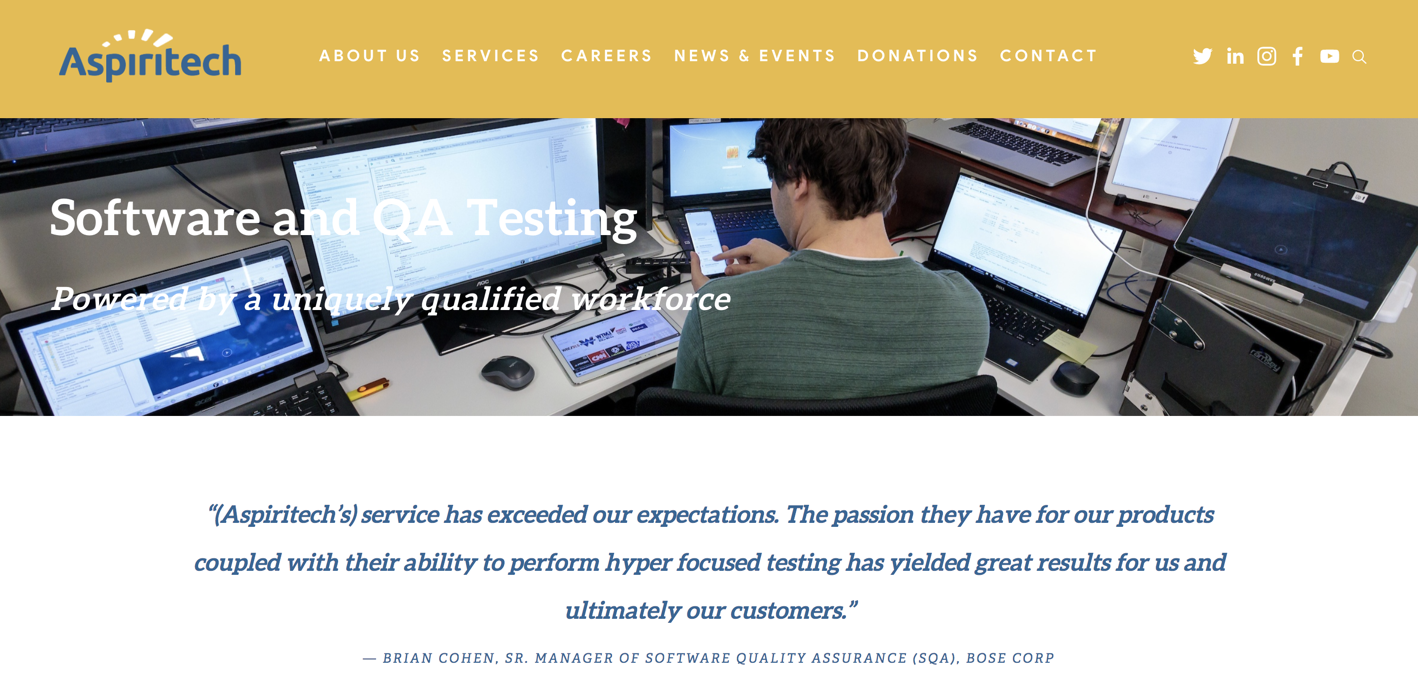
A QA and software testing company employing autistic adults.
Type of roles:
QA and software testing.
Hiring process:
The application process starts with a simple form. If accepted, 2 weeks training takes place in Highland Park, Illinois, or Chicago’s West Loop.
Remote option:
No.
9) Daivergent
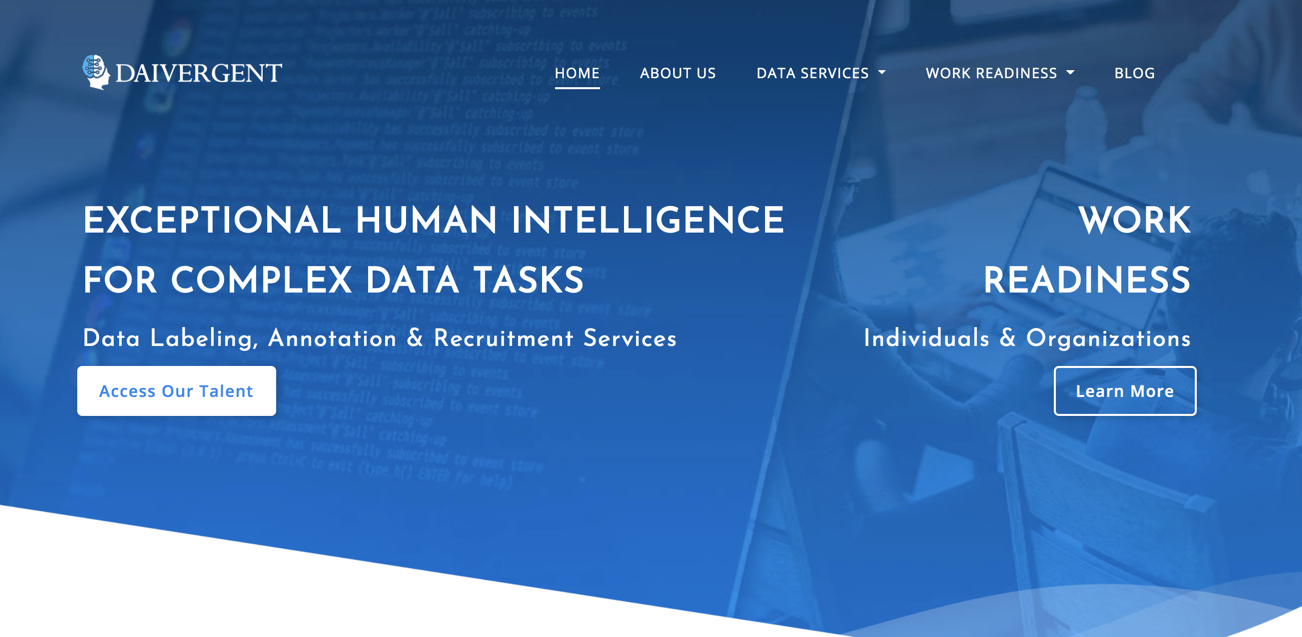
A startup that provides data labeling solutions for computer vision and AI/ML products through its pool of data specialists on the autism spectrum.
Type of roles:
Data labeling and annotations.
Hiring process:
There is screening assessment, qualifications task and onboarding. All online.
Remote option:
Yes
and…
10) Spectroomz
Spectroomz is a platform dedicated to remote (work from home) jobs for autistic adults. Companies can post SEO (search engine optimization) projects and autistic adults who took Spectroomz’s SEO online course are hired remotely to do these jobs. Peer5 is one company that hired Spectroomz for its SEO needs. In addition, Spectroomz sends other types of roles in its weekly newsletter.
Type of roles:
SEO, writers, designers, QA, admin support, developers.
Hiring process:
In order to receive SEO job opportunities, you’ll need to complete Spectroomz’s SEO online course.
Remote option:
Spectroomz only provides remote job opportunities.

6 remote (work from home) SEO-related jobs for autistic adults - this quiz will help you choose.
The 32 remote jobs for autistic people quiz has helped many autistics and Aspergers adults to learn what kind of work from home jobs are a good fit for them.
Spectroomz has recently focused around SEO (Search Engine Optimization = getting sites ranked high on Google), an $80 Billion industry. Anyone can take the SEO training and join.
There are different SEO roles a freelancer can do from home, and in order to help people with autism understand what’s the best role for them, we have prepared a quiz.
Choosing the best remote job for you - the quiz
There are 6 roles below and a quiz that will help you choose which one is most relevant to you.
The tool doesn’t take into account your interest and qualifications (our SEO course/training can help with that). It focuses on the nature of work. If you have special qualifications, make sure to take it into account
How it works
Answer 4 questions below and get the score;
Check below the list of roles based on your score;
Optional: submit your details to become a freelancer on Spectroomz.
Step 1 - The autistic SEO remote job quiz
Step 2 - Check to which category you belong and choose the right job for you
Group A (score is under or equal to 5.5):
SEO writer - if you have writing skills, being an SEO writer is in the heart of the SEO process. It means writing content and using the right keywords that will help companies to rank high on Google.
Ongoing content optimizations - There is an ongoing process of optimizing content even after it was officially posted (changing the titles, adding keywords and much more). This is a very analytical role.
Group B (score 5.6-8):
Keyword research - Keyword research is the process of making a list of keywords and phrases your potential clients are searching for, and based on that list, generating the content that will drive them to your site. This is an analytical role (and super interesting).
Technical SEO - If you have a technical orientation (not necessarily a coder) this might be for you. An example for a task under this role would be to plan the URL structure of a website.
Group C (score 8-10):
Backlink building - getting other sites to link to your site is part of the SEO process. This requires marketing orientation.
Email finder - part of the backlink building process is to find emails of other websites owners. It’s a repetitive work.